
AI and the Facilitator: Connecting the Workshop to Learning at Work
How does learning continue when people return to work? A practical design connecting facilitated group work with AI-supported individual practice, from preparation and the live session to workplace application.
Imagine sixteen colleagues discussing the same case in a workshop. Some speak immediately. Others listen and take notes, waiting for a moment to share their own experience. Everyone leaves with an idea to try the following week.
Then Monday arrives. Between meetings, customer requests and deadlines, will that idea get used? Who can help when someone struggles? How do we find out what the person who never spoke understood?
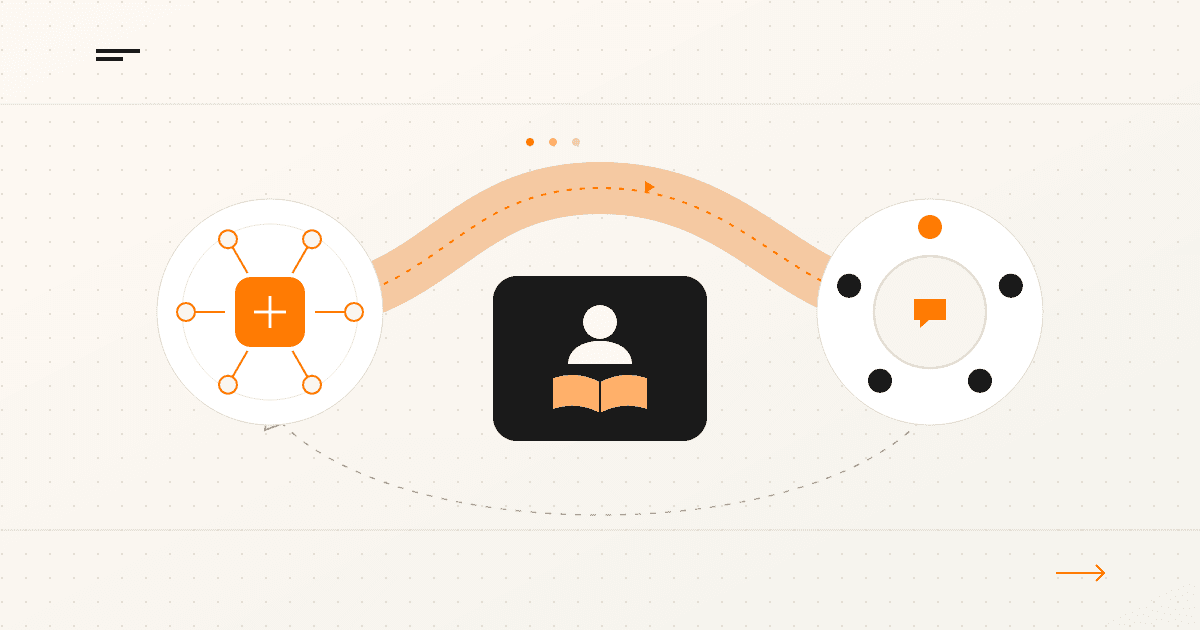
These questions reveal where AI and a facilitator can work together. The facilitator supports collective thinking during the session. AI assistance grounded in the training materials can provide individual preparation and practice. Learning design connects the two.
30-second summary
- The facilitator manages participation, discussion and the group’s working process.
- AI can support preparation, practice and feedback using defined learning materials.
- The learner makes decisions, explains the reasoning and takes responsibility for trying an action at work.
- To understand the contribution, examine decision quality and subsequent application alongside conversation activity.
Making space for a group to think
A facilitator designs and guides the process through which a group works towards a purpose. In training, the same person may alternate between explaining a subject as an instructor and facilitating discussion. Making that transition clear helps participants understand whether they are receiving an explanation or exploring different approaches.
The International Association of Facilitators identifies planning appropriate group processes, sustaining a participatory environment and guiding groups towards useful outcomes among its core competencies. This frames facilitation as work that extends beyond presenting content. IAF core competencies.
Consider a participant saying, “That approach would never work in our team.” A facilitator can ask about the experience behind the objection, invite other perspectives and make the group’s assumptions visible. They attend to who has not spoken as well as who has.
An AI-generated summary may help that work. It does not provide sufficient grounds to label a quiet participant disengaged or a brief answer incompetent. Human judgement and the participant’s own explanation remain essential.
AI support
- Practice with approved material
- Focused feedback on gaps
- Drafts for human review
Facilitator
- Participation and group process
- Discussion and disagreement
- Context and human judgement
The learner
Makes the decision, builds the reasoning and tries it at work.
Designing AI support across three stages
One goal. Three connected moments.
- 01
Before
Individual preparation
Read the material. Make a choice. Explain your reasoning.
A question to explore
- 02
During
Facilitated practice
Compare reasoning. Hear another perspective. Rehearse together.
An action to try
- 03
After
Application at work
Try the action. Revisit the material. Discuss what was difficult.
An experience to review
Illustrative design: timing and support are adapted to the learning goal.
1. Before training: Establish a shared starting point
Give participants a short video, a few knowledge cards and a case related to the learning goal. Ask one question: “What would you do first, and why?”
AI can discuss the response within the approved material. It can point back to a relevant passage when something is missing or ask the learner to explain a choice. The facilitator can consider which themes deserve attention in the session.
Decide what will be shared in advance. Which individual answers can the facilitator see? Are identities needed? Must participants describe a private workplace experience? If common themes are enough for preparation, sharing entire personal conversations may be unnecessary.
2. During the session: Compare reasoning
A live session creates room to examine different responses to the same case. The facilitator can follow “Which option did you choose?” with “What information did you base that decision on?”
AI could draft a summary from approved notes or display a prepared case. The facilitator and participants should check whether the summary represents the discussion fairly. Omitting a minority view may erase an important part of the conversation.
Decisions about participation, which disagreement to explore and when to pause remain with the facilitator. AI is optional at each stage: a small-group discussion or a moment of quiet reflection may be sufficient.
3. After training: Revisit a workplace attempt
At the end of the session, ask each participant to choose a practical action: “What will you do differently in your next feedback conversation?”
Revisit that decision in a follow-up activity. The participant describes what they tried, what happened and where they struggled. AI can ask a question connecting the experience to the training concepts. Unresolved issues or matters requiring human judgement can be discussed with the facilitator.
Timing matters. Someone who has not yet had a relevant conversation cannot report an application outcome. Arrange the follow-up around a realistic opportunity to practise.
An example: Preparing for a difficult feedback conversation
The following is an illustrative design, not a customer result or a measured success claim.
An organisation wants team leaders to distinguish observation from interpretation in feedback conversations. Its training materials offer three steps: name a specific behaviour, explain its impact and invite the other person’s perspective.
During preparation, a participant watches a short case and rewrites “You never take responsibility” using those steps. If the response still judges personality, AI can refer back to the observation–interpretation distinction and ask, “What behaviour did you directly observe?”
In the workshop, the facilitator introduces alternative openings for the same conversation. Participants rehearse in pairs. An observer notes whether the three steps appear and whether the speaker makes room to listen.
At work, the participant tries the approach in a suitable conversation. The follow-up explores both whether the steps were used and where the participant struggled. Sharing a person’s name or every detail of the conversation is unnecessary.
Keep the learning goal consistent throughout. Teaching one approach during preparation and assessing against a different model afterwards can create conflicting expectations.
Where should AI stop?
Define the materials AI may use, the criteria for evaluating responses and the situations that require a person. Confidently filling gaps with unsupported information makes it harder for learners to know what to trust.
UNESCO’s guidance on generative AI advocates a human-centred approach to education and preserving human agency. The division of responsibilities proposed here is a design interpretation for corporate learning, not evidence of a particular product’s effectiveness. UNESCO guidance.
For a question with explicit correctness criteria, a fully correct answer may only need the authored explanation and a short acknowledgement. Turning every correct answer into another AI conversation takes time and adds processing cost. A wrong or incomplete response may benefit from support focused on one specific gap.
Open-ended work needs different treatment. A long, fluent answer is not necessarily a good one. Consider its reasoning, consistency with the material and the conditions of application. Keep a human discussion available for sensitive situations such as team conflict.
How can we assess the contribution?
Choose one behaviour at the start of a pilot. In the feedback example, that might be using an observable behaviour instead of a personality judgement.
Use different cases of similar difficulty before and after training, assessed against the same criteria. Later, collect a short reflection on an actual workplace attempt. This gives three distinct signals: what the person knows, how they decide in a case and what they can apply at work.
AI message counts and session duration can help interpret those signals. Neither is sufficient evidence of success. A long conversation might reflect productive inquiry, or someone repeatedly getting stuck.
Improvement in a small pilot cannot be attributed entirely to AI. The facilitator, case quality, manager support and working conditions may all contribute. The initial purpose is to identify which stages help and where the design needs to change.
How we approach this at Blink AI
Blink AI brings video, knowledge cards, questions and AI-supported interaction into a learning flow. That structure can be used to place preparation before a facilitated session and individual practice afterwards.
We value letting learners revisit material, avoiding unnecessary dialogue after correct answers and keeping AI support connected to the training content. The specific flow should be designed around the organisation’s goal, its materials and the facilitator’s way of working.
Start with one course. What knowledge is needed beforehand? Which decision will the group discuss? What behaviour will participants try at work? Those answers make the division of responsibility concrete.
Frequently asked questions
Does the facilitator need technical expertise?
They do not need to write code. They should understand which materials the tool uses, how to check its output and when to intervene. That preparation belongs in the training plan.
Does every participant need a long AI conversation?
No. Support should match the task and the response. An authored explanation, one follow-up question or a short conversation with the facilitator may be enough.
Can training be delivered entirely through AI?
Some individual knowledge and practice activities can be designed that way. When the goal involves shared decisions, disagreement or interpersonal rehearsal, the role of human facilitation needs explicit planning.
Must every course be redesigned before starting?
Begin with one case and an observable behaviour. Add short preparation and a follow-up to an existing session, assess the contribution and use that evidence to decide the next step.
Related reading
- 12 min read
"We Use AI a Lot" — Compared to What? Three Questions That Measure Whether AI Helped
"We use AI a lot" is a claim about effort volume: it says how much was used, not what came out. The same sentence can describe pushing against capacity and describing an unplanned quarter, so on its own it carries no information. This piece separates the usage metric from the impact metric, shows how framing AI as a coach rather than a production machine changes what you measure, and sets out three questions — Comparison, Decision, Durability — with evidence from METR, McKinsey, PNAS and the QJE, each with its limits stated. It closes with the serious objections and a short FAQ.
Read post - 9 min read
The Speed Trap: AI Made Content Easy, Not Learning Ownership
AI can turn an idea into a working product in hours — but producing a course and owning the learning are two different jobs. Shipping two AI apps back to back surfaced a speed trap that sits at the heart of learning design too. This piece reframes the "user manual" trap, generic soulless content, and the three filters to run before shipping — empathy, legal, first impression — for L&D teams.
Read post